
Pico de Gallo vs Salsa: What Is Salsa Fresca?

By the Blue Burro Team | Last updated: November 16, 2026
What You Need to Know
- Pico de gallo (pico for short) is a chunky, uncooked salsa made from diced tomatoes, white onion, chiles, cilantro, lime juice and salt.
- Salsa fresca is just another name for pico. So are salsa cruda and salsa mexicana.
- "Salsa" is the big category. It can be cooked, blended, smooth, roasted, red or green.
- Pico stays chunky and fresh. Most table salsas are blended and runnier.
- Salsa roja is built on tomatoes and dried or fresh chiles; salsa verde is built on tomatillos.
Pico de gallo vs salsa sounds like a showdown, but it's really a family tree. Every pico is a salsa. Not every salsa is pico.
So what is salsa fresca, and where does it fit? It's the chopped, uncooked salsa you scoop with chips or spoon over tacos, and it's the same thing as pico under a different name.
Quick answer: Pico de gallo, also called salsa fresca, is a fresh, chunky Mexican salsa of diced tomato, onion, chile, cilantro, lime juice and salt. It's never cooked or blended. "Salsa" is the broader word for any Mexican sauce, including smooth, cooked and tomatillo-based ones.
What Is Pico de Gallo?
It's a raw, chopped salsa and a staple of Mexican cuisine, made with tomato, onion, chiles, cilantro, lime and salt. Wikipedia's entry on the salsa describes the traditional chile as the serrano pepper, with jalapeño or habanero as common swaps.
Think of it as a salad that thinks it's a sauce. The pieces stay distinct, so every bite has a little crunch of onion, a burst of tomato and a hit of lime.
Because it isn't watery, it works as a topping as well as a dip. It goes right into tacos, burritos and bowls without making them soggy.
What Goes Into It?
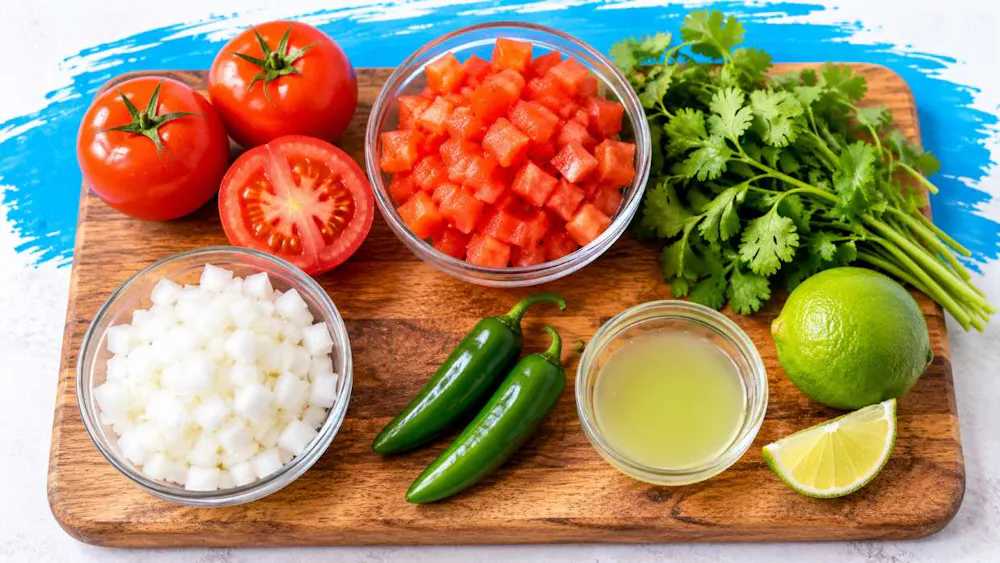
What is in pico de gallo is short and simple: six ingredients, all fresh.
- Diced tomatoes: ripe Roma tomatoes are the usual choice because they're firm and less watery.
- White onion: sharp and crunchy, cut small.
- Chiles: serrano pepper for a clean, bright heat, or jalapeño for a milder kick.
- Cilantro: fresh, herbal and essential.
- Lime juice: for brightness and to tie the flavors together.
- Salt: pulls a little juice from the tomatoes and seasons everything.
Our take: pick the ripest tomatoes you can find and skip the garlic. Garlic overpowers a salsa this light, and the classic version doesn't need it.
What Does the Name Mean?
The pico de gallo meaning is "rooster's beak" in Spanish. Nobody agrees on why, and there are at least three popular theories.
- The pinch theory: people ate it by picking up pieces between thumb and forefinger, which looks like a pecking beak. Tasting Table reported this as the most cited explanation in 2022.
- The chile theory: in Sonora, some say the serrano pepper is shaped like a rooster's beak.
- The chicken feed theory: food writers Rick Bayless and Deann Groen Bayless suggested the chopped mix looks like bird feed.
It's also called salsa bandera, or "flag salsa," because the red tomato, white onion and green chile and cilantro match the Mexican flag.
What Is Salsa Fresca?
Salsa fresca means "fresh salsa," and it's another name for pico. Wikipedia lists salsa fresca, salsa cruda ("raw salsa") and salsa bandera as alternate names for the same chopped tomato salsa.
In Mexico, many people simply call it salsa mexicana. In US restaurants, "salsa fresca" is a common menu term because it tells you exactly what you're getting: something fresh, not jarred or cooked.
Salsa Fresca vs Pico de Gallo: Is There a Difference?
No, salsa fresca vs pico de gallo is usually a naming difference, not a recipe difference. Both mean chopped, uncooked tomato, onion, chile, cilantro and lime.
The one twist is regional. In central Mexico, "pico" can mean a fruit snack instead of a salsa.
In Guadalajara, the capital of Jalisco, chef Zarela Martínez's site describes pico de gallo as a fruit salad of jícama, cucumber and seasonal fruit, tossed with lime and chile powder.
It's often sold from carts in paper cones. So if you order pico in Jalisco, you might get fruit.
Pico de Gallo vs Salsa: What's the Difference?
The main difference in pico de gallo vs salsa is texture and preparation. Pico is chopped, raw and chunky. Most other salsas are blended, cooked or both, which makes them smoother and runnier.
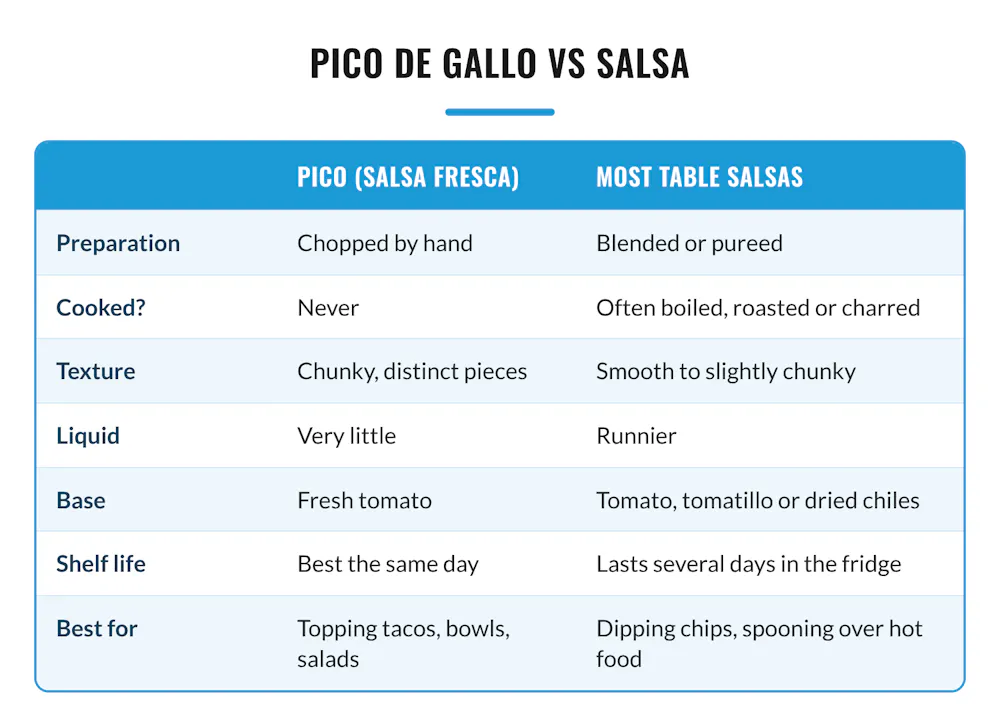
MasterClass puts it simply: salsa is runnier because its tomatoes are often blended, while pico has much less liquid.
For chips and salsa, both work. Pico gives you a scoop of crunchy vegetables; a blended salsa coats the chip evenly.
Salsa Roja vs Salsa Verde: How Do They Compare?
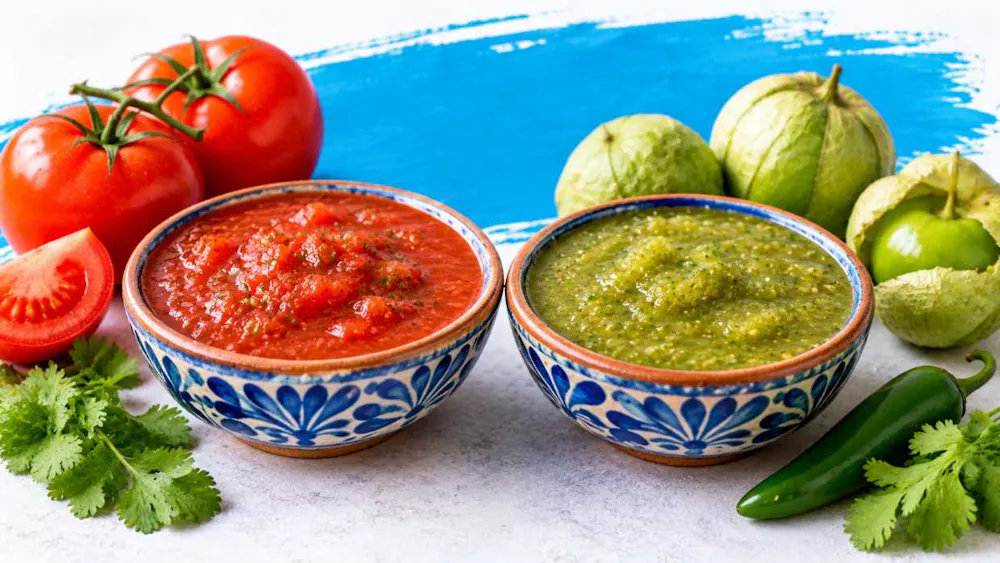
The main difference in salsa roja vs salsa verde is the base. Salsa roja ("red sauce") is built on tomatoes and red or dried chiles. Salsa verde ("green sauce") is built on tomatillo, a tart green fruit in a papery husk.
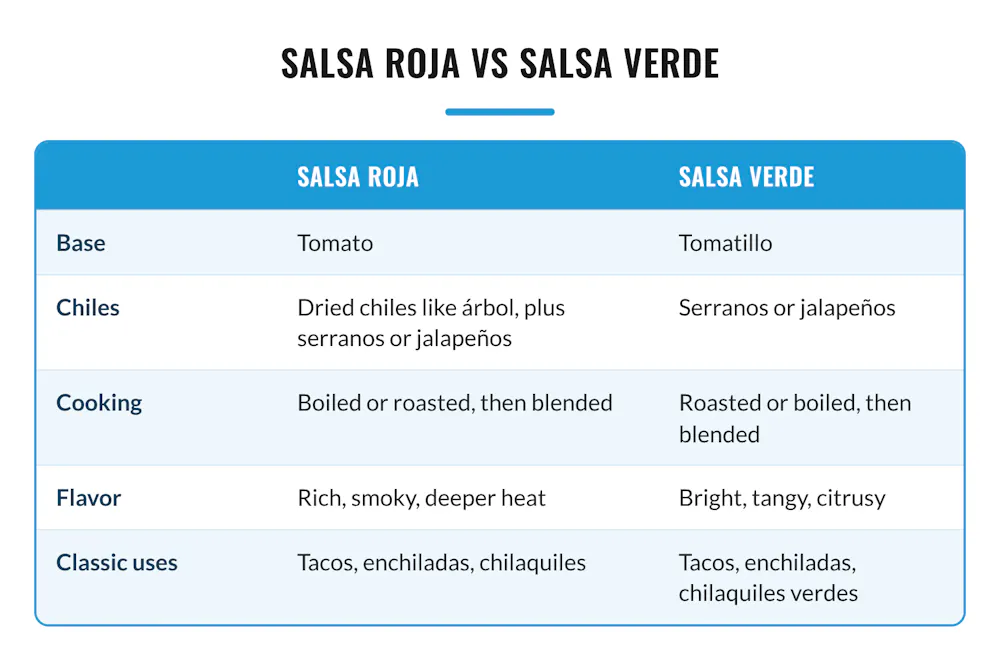
Cook Sonia Mendez Garcia's salsa roja and salsa verde recipes show the split: boiled Roma tomatoes and dried chiles for roja, and dry-roasted tomatillos with serranos and cilantro for verde.
Tomatillo is the key to green salsa's tang. It looks like a small green tomato but tastes sharper, almost like a lime crossed with a green apple.
Where Does Salsa Come From?
Salsa goes back to the Aztec Empire, long before Spanish contact. A 2016 Mental Floss history cites the Florentine Codex, where a Spanish missionary described an Aztec vendor selling sauces of tomatoes with smoked, hot, yellow and mild red chiles.
Food Republic reported in 2024 that the Spanish missionary and linguist Alonso de Molina is credited with coining the word "salsa" in 1571.
Mexican cuisine has been building on that tomato and chile pairing ever since, and the Aztec Empire's sauces are the ancestors of every jar on the shelf today.
How Do You Make It at Home?
Make pico by dicing everything small and evenly, then seasoning right before serving:
- Dice 4 Roma tomatoes into small, even cubes.
- Mince half a white onion and 1 to 2 serrano or jalapeño peppers.
- Chop a handful of cilantro.
- Combine everything in a bowl.
- Season with lime juice and salt, then stir gently.
- Rest for 10 to 15 minutes so the flavors blend.
Make it the day you plan to eat it. The salt draws water out of the tomatoes, so leftovers get soupy.
Where Can You Get Fresh Salsa in Long Beach?
At Blue Burro, salsa fresca is one of the most-used ingredients on our menu. It goes into our carne asada and pollo asado burritos, our shrimp and Surf and Turf tacos, our salads and protein bowls.
It also tops every order of rolled tacos, right next to the guacamole.
On our salads, it sits under a sprinkle of cotija.
See every option on the Blue Burro menu.
You can also find a Blue Burro location in Long Beach and nearby Southern California cities.
Frequently Asked Questions
Is pico spicy?
It's usually mild to medium, depending on the chile and how much goes in.
Serrano peppers are hotter than jalapeños, and leaving in the seeds and white ribs adds even more heat. For a milder version, use one seeded jalapeño. For more kick, use two serranos with seeds.
How long does pico last?
Pico tastes best the day it's made. Covered in the refrigerator, it keeps for about a day or two, but the tomatoes release water and the texture softens quickly. If it gets watery, drain the liquid before serving. Cooked, blended salsas usually last longer because they don't have chunks of raw tomato breaking down.
Can you use pico instead of salsa?
Yes, in most dishes. Pico works on tacos, burritos, eggs, grilled meats and nachos. It's less ideal for dishes that need a sauce to coat or soak in, like enchiladas or chilaquiles, where a blended salsa roja or salsa verde works better. For dipping chips, either one is fine.
Is pico healthy?
Pico is one of the lightest toppings you can choose. It's made entirely of fresh vegetables, herbs, lime and salt, with no oil or sugar. That makes it a good swap for creamy toppings like sour cream or queso if you want flavor with fewer calories. Just watch the salt if you're limiting sodium.
What is the difference between salsa cruda and salsa fresca?
There's essentially no difference. Salsa cruda means "raw salsa" and salsa fresca means "fresh salsa." Both refer to uncooked, chopped tomato salsa, the same thing most people call pico. Some cooks use "salsa cruda" for any raw salsa, including ones made with tomatillos, but on most menus the names are interchangeable.
The Quick-Reference Cheat Sheet
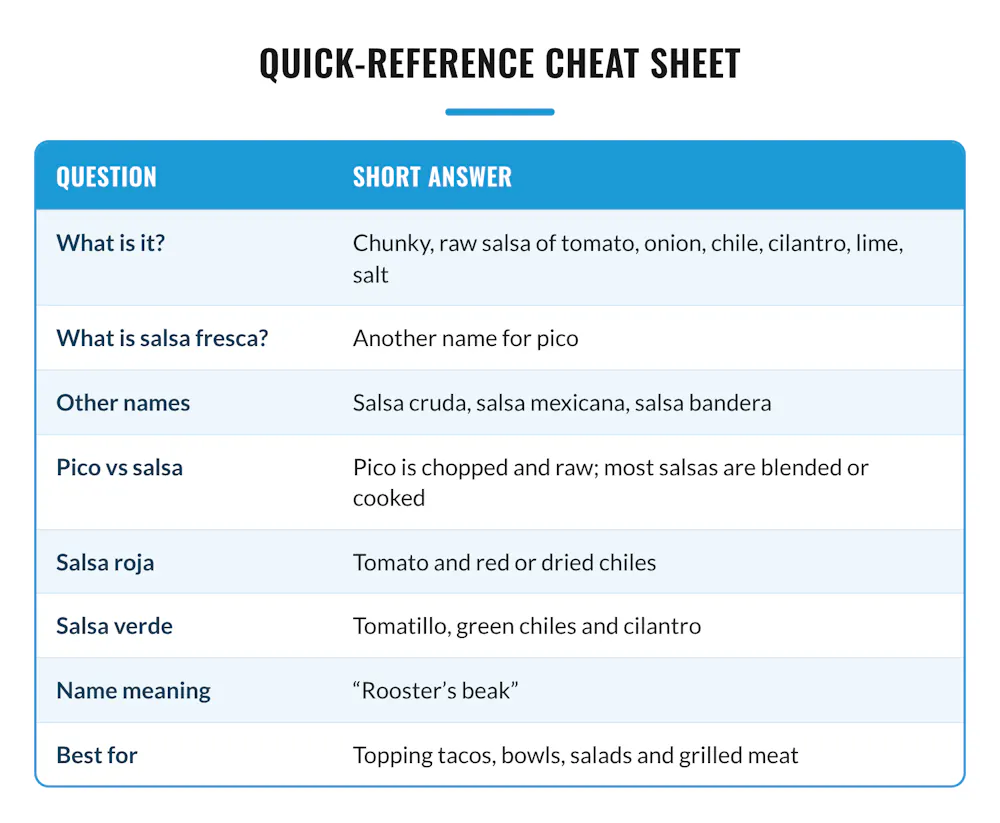
The bottom line: pico is the salsa you chop, not the one you blend. If you want crunch and freshness, go pico. If you want something to soak in, go salsa.
One honest caveat: naming changes by region and by kitchen. A taqueria might call its blended salsa "salsa fresca" simply because it's made fresh daily, so when in doubt, ask.
Feeding a group? Our catering packs come with salsa included.