
What Is Cotija Cheese? Flavor, Uses and Best Substitutes

By the Blue Burro Team | Last updated: November 9, 2026
what you need to know
- Cotija is a salty, crumbly Mexican cheese made from cow's milk, named after the town of Cotija de la Paz in Michoacán.
- It comes young (soft, mild, like feta) or aged (hard and sharp, like Parmesan).
- It softens with heat but doesn't melt, so it's used as a finishing cheese.
- Queso fresco is fresh, mild and creamy. Cotija is aged, firm and much saltier.
- The best cotija cheese substitute is feta for young cotija and Parmesan for aged cotija.
What is cotija cheese? It's the white, salty crumble you see scattered over elote, tacos and loaded fries, and it does more work per pinch than almost any other cheese on the table.
Think of it as Mexico's answer to Parmesan: a little goes a long way, and you add it at the end, not the beginning.
| Quick answer: Cotija is an aged Mexican cheese made from cow's milk, originally from the town of Cotija in Michoacán. It's salty, tangy and crumbly, and it doesn't melt, so it's sprinkled over finished dishes. Young cotija tastes like mild feta; aged cotija is harder and closer to Parmesan. |
What is cotija cheese, exactly?
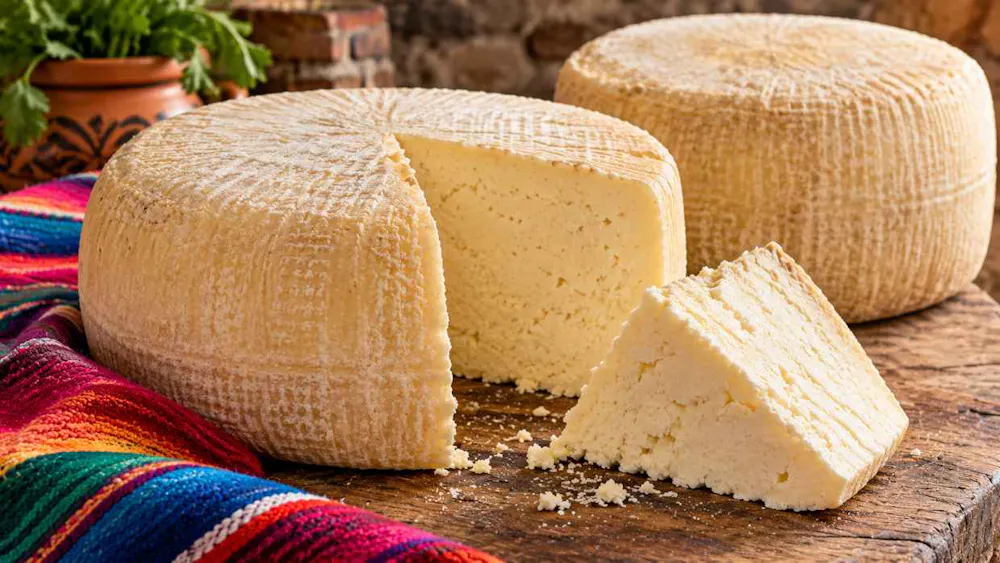
Cotija is a cow's milk cheese, an aged cheese that's salted and pressed until it turns firm and crumbly. According to Wikipedia's cotija entry, traditional wheels are aged between 100 and 365 days and come in large cylinders weighing about 28 kilograms.
There are two main styles you'll see:
- Young cotija: semi-firm, milder and moister, similar to a mild feta.
- Aged cotija (añejo): hard, dry and sharp, closer to Parmesan.
Most US grocery stores sell the younger style, either in blocks or pre-grated tubs.
Where does cotija cheese come from?
Cotija cheese comes from the mountains along the border of Michoacán and Jalisco in western Mexico. It takes its name from Cotija de la Paz, a market town in Michoacán where ranchers brought their wheels to sell.
The traditional version is called Cotija de Montaña (mountain cotija). culture magazine reported in July 2025 that it's made only during the late summer rainy season in the Sierra Jalmich, when cows graze on fresh mountain grass.
In 2003, advocates petitioned the Mexican government for a European-style denomination of origin. In 2005, producers received a collective trademark instead, "Queso Cotija de la Región de Origen," the first granted to a Mexican heritage food, according to culture magazine.
A collective trademark works like a club membership. Only producers who follow the group's rules on place and aging can use the name, a bit like how only certain regions can call their wine Champagne.
What does cotija cheese taste like?
Cotija cheese tastes salty, tangy and milky, with a sharper bite as it ages. Young cotija is bright and briny; aged cotija gets nuttier and more intense.
Picture feta's saltiness with the dry, grainy crumble of Parmesan. That's the sweet spot most store-bought cotija lands in.
Here's the thing: cotija is a salty cheese first. Use it like you'd use finishing salt, a pinch at a time, and taste before adding more.
Does cotija cheese melt?
No, cotija doesn't melt the way cheddar or Oaxaca cheese does. Heat softens it and makes it a little creamy, but it stays in grainy crumbles.
That's why kitchens add it at the end. On our menu, it goes on top of loaded fries after the melted cheese, so you get both stretchy and salty in the same bite.
Cotija vs queso fresco: what's the difference?
The main difference in cotija vs queso fresco is aging. Queso fresco is a fresh, unaged cheese that's soft, mild and milky. Cotija is aged, firmer and much saltier.
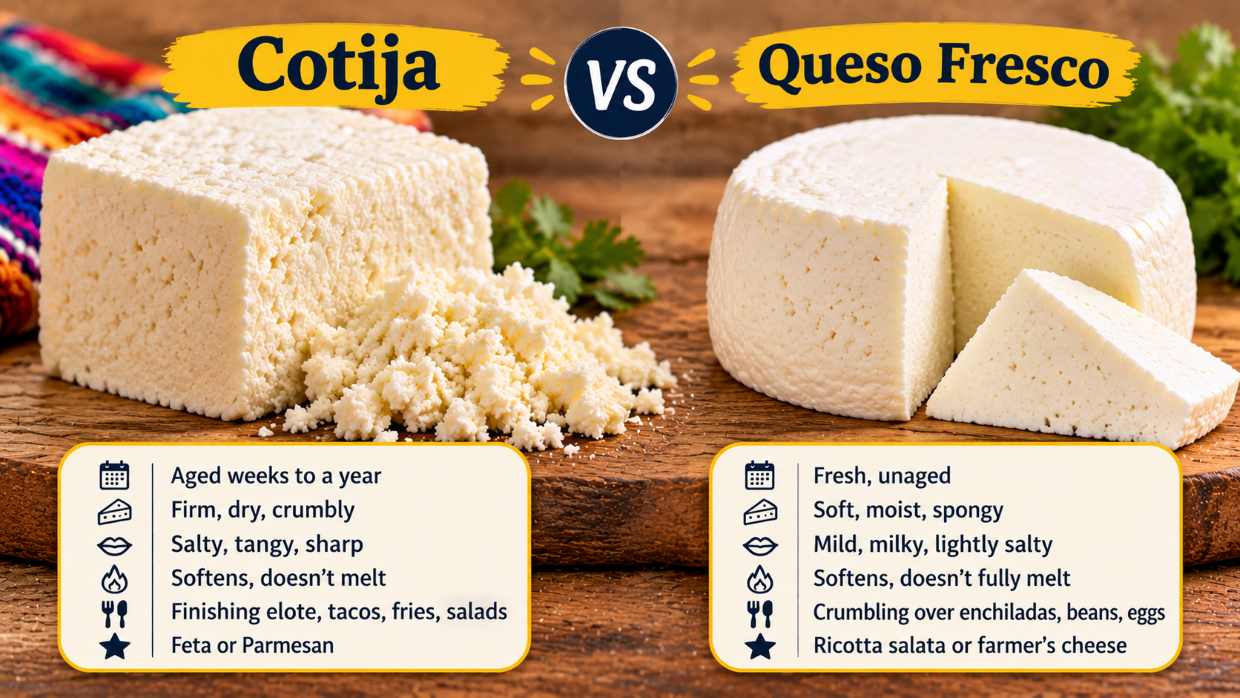
Both are Mexican cheeses used as toppings, so recipes sometimes swap them. Just expect queso fresco to taste much milder.
Is cotija cheese pasteurized?
Most cotija sold in US grocery stores is made with pasteurized milk, and the label will say so. Traditional mountain cotija in Mexico is often made with raw milk, which is one reason it rarely shows up in US stores.
Sporked's 2024 explainer notes that under FDA rules, cheese made from unpasteurized milk must be aged at least 60 days before it can be sold in the US.
If you're pregnant, older or have a weakened immune system, read the label carefully. The FDA's Listeria guidance, current as of January 2025, lists any cheese made with unpasteurized milk as high risk.
The FDA also lists queso fresco-type cheeses as high risk even when pasteurized. When in doubt, ask your doctor which cheeses are safe for you.
What is the best cotija cheese substitute?
The best cotija cheese substitute depends on which cotija the recipe needs. Use feta for young cotija and Parmesan for aged cotija.
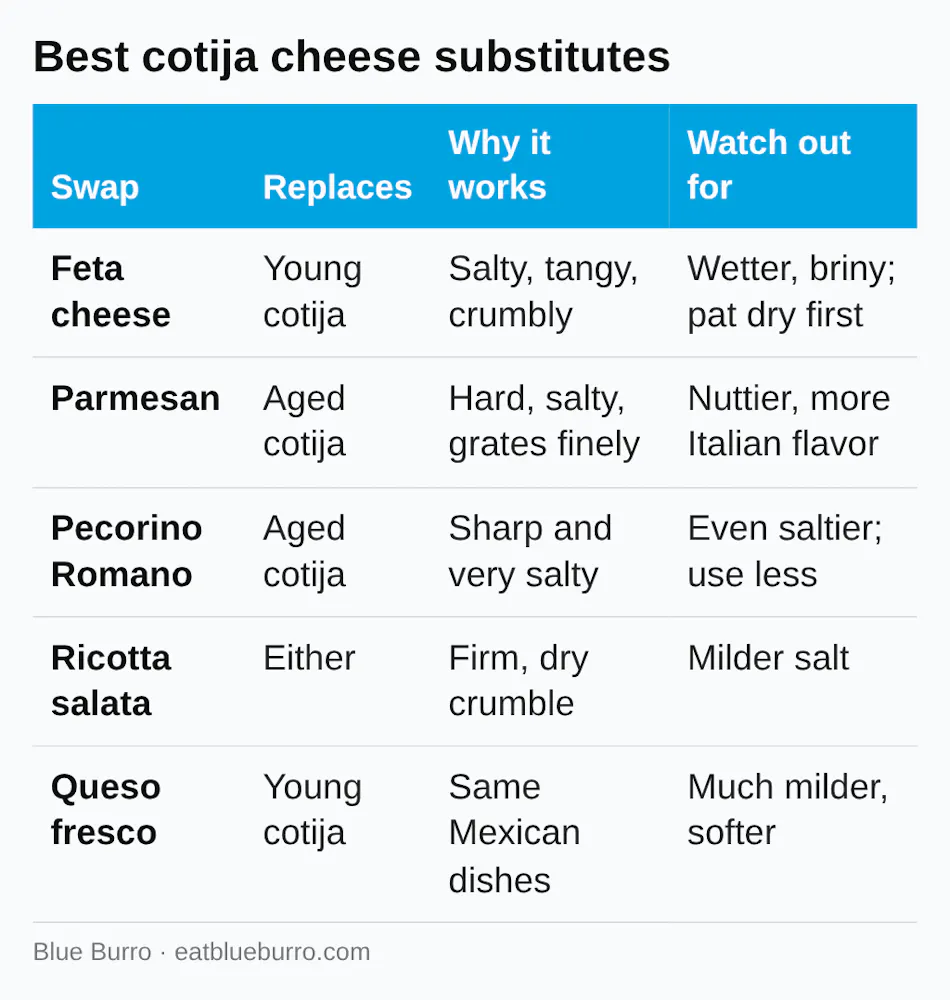
Our take: for elote and tacos, feta is the closest swap. Crumble it small and pat it dry so it doesn't make the dish soggy.
For a finer, sandy finish on soups or beans, grated Parmigiano-Reggiano works better. It's harder and nuttier, but the salt and texture land in the same place.
How do you use cotija cheese?
How to use cotija cheese is simple: treat it as a finishing touch and crumble or grate it over a dish right before serving. These are the most popular ways to use it:
- Elote and esquites: Mexican street corn rolled in mayo, chile and cotija.
- Tacos and tostadas: a pinch over the top for salt and contrast.
- Loaded fries: the final layer on carne asada fries, over guacamole and sour cream.
- Salads: a salty crumble instead of feta.
- Beans, soups and enchiladas: grated cheese stirred in or sprinkled on top.
- Fruit: with watermelon or mango and a squeeze of lime.
For the best texture, buy a block and crumble it yourself. Pre-grated cotija is finer and drier, which works well for elote but can disappear on a big plate.
Where can you taste cotija in Long Beach?
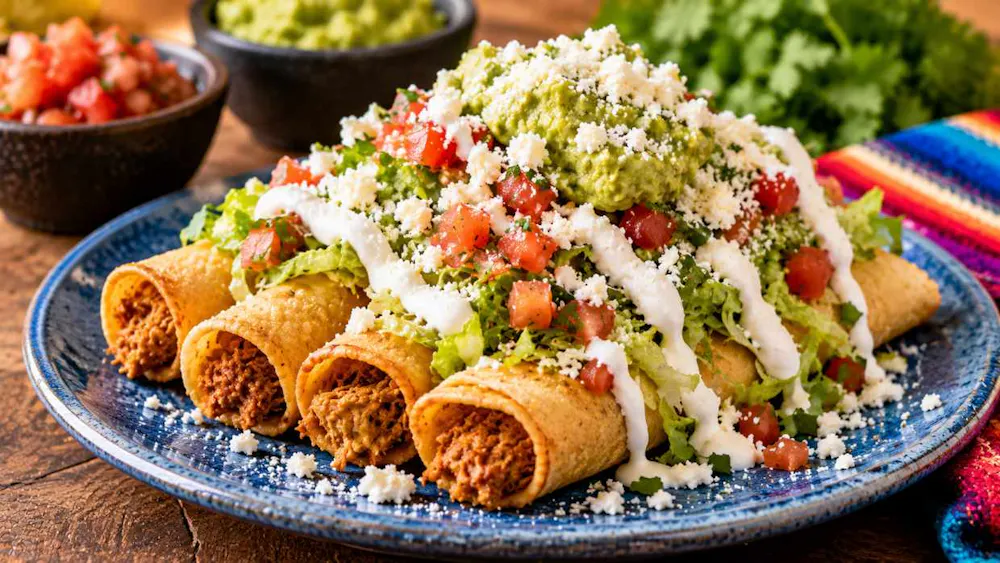
At Blue Burro, cotija cheese finishes a lot of our menu. It tops our fries and chips, our shrimp and Surf and Turf tacos, our salads, and every order of rolled tacos.
It's the last layer on our pollo asado fries, too.
The same goes for fries made with adobada, our red chile pork.
See every dish on the Blue Burro menu.
You can also find a Blue Burro location in Long Beach and nearby Southern California cities.
Frequently asked questions
How do you pronounce cotija?
Cotija is pronounced "koh-TEE-hah." The J in Spanish sounds like an English H, and the stress falls on the middle syllable. It's named after the town of Cotija in Michoacán, so the cheese and the town share the same pronunciation. If you hear "koh-TEE-jah" at a grocery store, you'll still be understood.
How long does cotija cheese last?
Once opened, store cotija tightly wrapped or in an airtight container in the refrigerator. Its low moisture and high salt help it keep longer than fresh cheeses like queso fresco. Always follow the date on the package, and throw it out if you see mold, slime or an off smell. Pre-grated cotija should stay sealed in its resealable bag.
Is cotija the same as feta?
No, but they're close cousins. Both are salty, crumbly cheeses, and young cotija tastes a lot like mild feta. The difference is that feta is usually made from sheep or goat milk and stored in brine, while cotija is a cow's milk cheese that's dry-aged. That makes cotija drier and firmer, especially as it ages.
Can you freeze cotija cheese?
Yes, cotija freezes reasonably well because it's already dry and crumbly. Wrap it tightly or seal it in a freezer bag, then thaw it in the refrigerator. The texture may get a bit more powdery, but that barely matters for a cheese you sprinkle on top. Use frozen cotija for cooking and topping rather than serving on a cheese board.
What is the difference between cotija and Parmesan?
Both are aged, salty cheeses used as finishing touches, which is why cotija is often called "Mexican Parmesan." Parmigiano-Reggiano is aged much longer, often a year or more, and has a nuttier, deeper flavor. Store-bought cotija is usually younger, saltier and tangier. Aged cotija comes closest to Parmesan in texture and taste.
The quick-reference cheat sheet
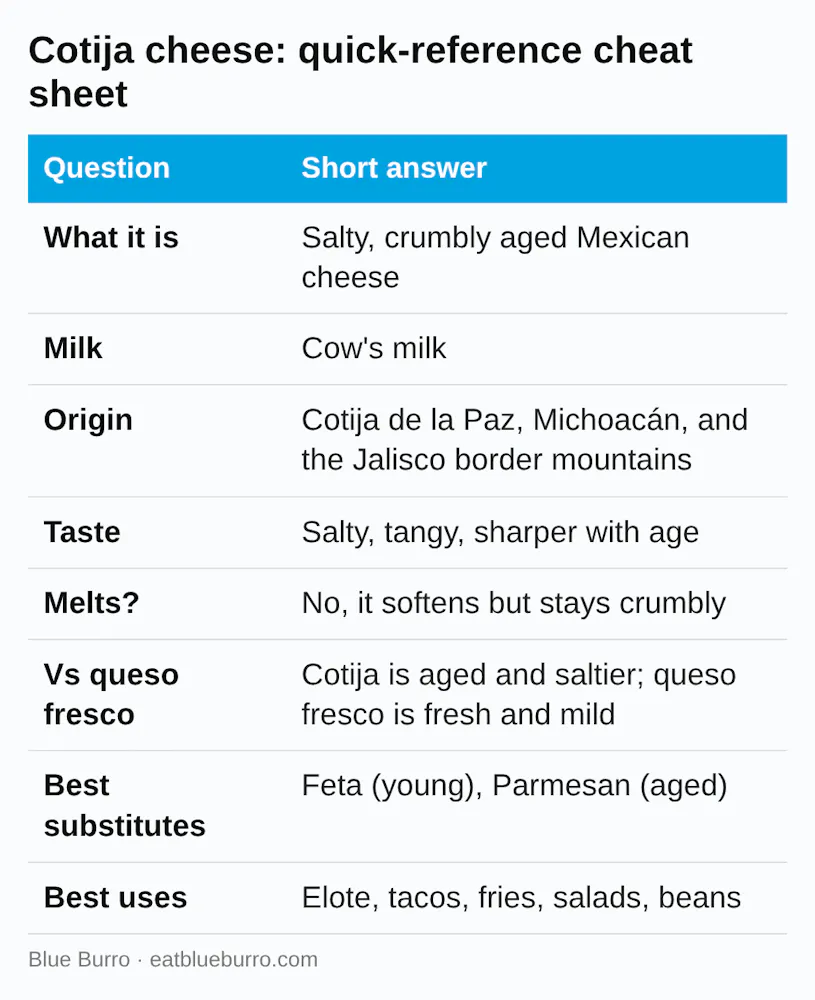
The bottom line: cotija is a seasoning disguised as a cheese. Add it last, use less than you think, and let its salt do the talking.
One honest caveat: the cotija in most US stores is a younger, milder version than the mountain cheese made in Michoacán. If you ever find the real Cotija de Montaña, expect a much sharper flavor.
Feeding a group? Our catering packs make it easy to feed everyone.