
What Is a Breakfast Burrito? Ingredients, Origin and Fillings

By the Blue Burro Team | Last updated: October 24, 2026
what you need to know
It is a flour tortilla wrapped around morning foods, usually scrambled eggs, potatoes, cheese and a breakfast meat.
The classic build is eggs, hash browns, shredded cheese and bacon, sausage, ham or chorizo, plus salsa.
Tia Sophia's in Santa Fe, New Mexico, put the first item called a "breakfast burrito" on its menu in 1975.
New Mexico versions often add Hatch green chile or come "smothered" in chile sauce.
A simple egg and cheese wrap runs about 300 calories; a fully loaded one can pass 1,000.
What is a breakfast burrito? It's the morning meal you can hold in one hand: scrambled eggs, crispy potatoes, melted cheese and a salty meat, rolled tight inside a warm flour tortilla. The fillings vary from diner to taco truck, but that core lineup barely changes.
Here's the thing: what sets one apart isn't fancy fillings. It's balance, so every bite gets egg, potato and meat at once.
| Quick answer: It's a flour tortilla filled with scrambled eggs, hash browns or breakfast potatoes, cheese and a meat such as bacon, breakfast sausage or chorizo, often with salsa or avocado. It started in New Mexico in the 1970s and is now a grab-and-go staple across the Southwest and Southern California. |
How is it different from a regular burrito?
It's an American breakfast wrapped in a flour tortilla, according to Wikipedia's entry on the dish. Outside the Southwest you'll sometimes see it called a breakfast wrap.
Think of it as a breakfast plate that packed itself for the road. The eggs, potatoes and bacon you'd eat with a fork all go into one tortilla instead.
The main difference from a lunch burrito is the filling. Rice and beans usually stay out, and eggs and potatoes take their place.
If you want the full story of the wrap itself, our guide to what a burrito is covers its roots in northern Mexico.
What goes in a breakfast burrito?
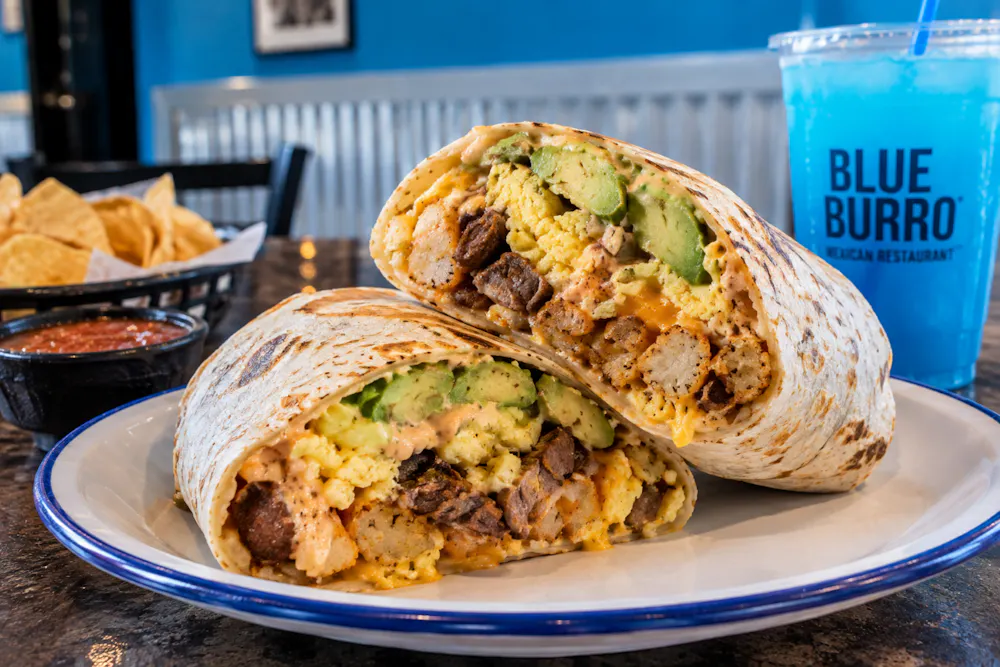
What goes in a breakfast burrito is simple: eggs, a starch, cheese, a protein and a sauce. These are the breakfast burrito ingredients you'll see almost everywhere:
Flour tortilla: large, soft and warmed so it folds without cracking.
Scrambled eggs: the one filling nearly every version shares.
Hash browns or breakfast potatoes: shredded or diced, cooked until crisp.
Shredded cheese: cheddar cheese is the classic, with pepper jack or Mexican blends close behind.
Breakfast meat: bacon, breakfast sausage, ham or chorizo.
Salsa and extras: salsa, avocado, sour cream, peppers or green chile.
The MasterClass guide to the dish, updated July 2025, makes the same point. It names scrambled eggs as the defining ingredient and notes that most versions skip rice and beans.
What are the best breakfast burrito fillings?
The best breakfast burrito fillings are the ones that bring salt, fat and crunch together. Here's how the most popular options compare:
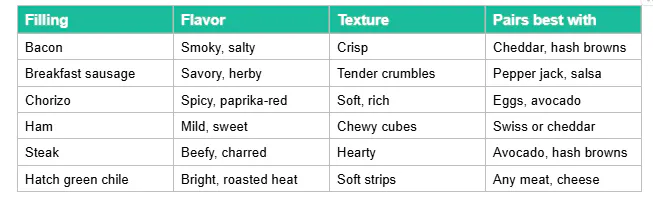
Our take: bacon is the safest first pick, but chorizo makes the most memorable bite. Its red, spiced fat soaks into the eggs and potatoes, so the whole burrito tastes seasoned.
Vegetarian? Swap the meat for beans, sautéed peppers and extra avocado. You lose some salt, so add a sharper salsa.
What makes a chorizo breakfast burrito different?
A chorizo breakfast burrito uses fresh Mexican chorizo, a loose pork sausage seasoned with chile and spices. It's cooked in a pan until crumbly, then scrambled right into the eggs.
That combination has its own name: chorizo and eggs, or chorizo con huevo. The sausage fat turns the eggs orange and carries its chile flavor into every bite.
Mexican chorizo is raw and needs cooking. Spanish chorizo is cured and sliced like salami, so it won't crumble the same way.
Why add hash browns?
A breakfast burrito with hash browns gets two things a plain egg wrap lacks: crunch and bulk. The crisp shredded potato keeps each bite from feeling like soft egg alone.
Potatoes were part of the story from the start.
In a 2022 story updated in April 2025, the Santa Fe New Mexican reported that Santa Fe cook Dee Rusanowski added hash browns after a young customer asked for potatoes.
Diced breakfast potatoes work too. They stay softer and hold more seasoning, while shredded hash browns stay crunchier.
Where did it come from?
Breakfast burrito origin points to Santa Fe, New Mexico, in the mid-1970s. Two local restaurants hold the best-known claims:
Tia Sophia's (1975): the family-run diner was first to print the name on a menu, and its version came smothered in chile.
Dee's Restaurant (about 1976): owner Dee Rusanowski wrapped ham, eggs and cheese in a tortilla and added hash browns, creating a handheld version.
Neither claim says nobody ate eggs in a tortilla before. Tia Sophia's own family told the Santa Fe New Mexican that New Mexicans had long rolled tortillas with bacon and potatoes. The restaurant simply named it first.
In 2019, the state Legislature named March 14 "Dee Day" in Rusanowski's honor. Tasting Table's history of the dish (July 2024) calls the question of who came first genuinely contentious.
From New Mexico, the idea spread fast. Fast food chains added their own versions from the late 1980s on, and taco trucks across Southern California turned it into an everyday grab-and-go meal.
What makes the New Mexico version special?
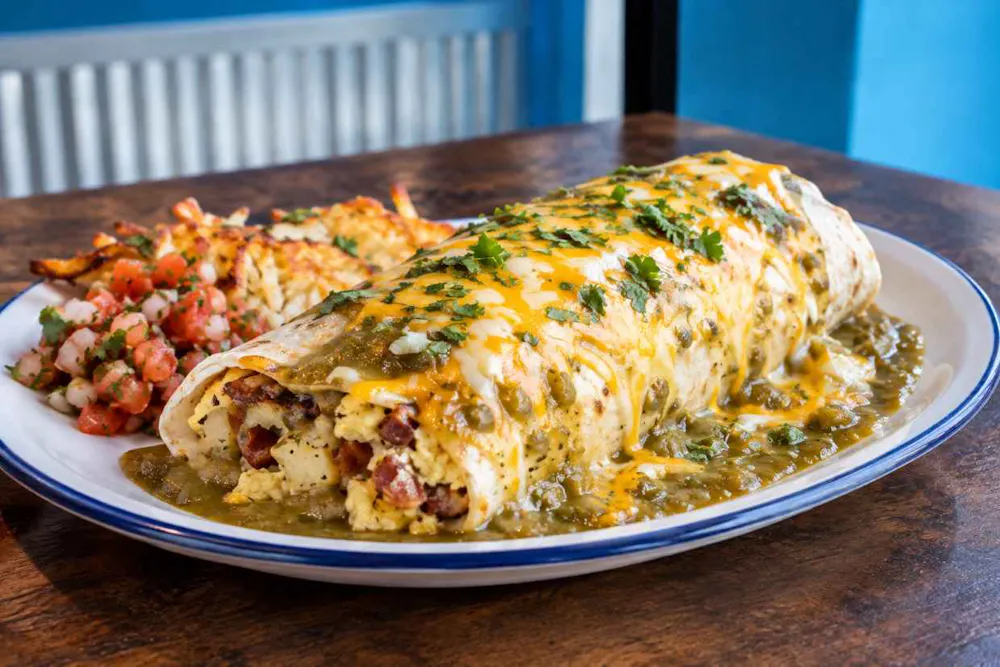
In New Mexico, the defining ingredient is chile. Locals answer the state question, "red or green?", by choosing red chile sauce, green chile or both, which they call "Christmas."
Most New Mexico green chile is grown near the village of Hatch. Saveur reported that only chiles from the Hatch Valley can carry the Hatch name, and they're roasted in big rotating drums every late summer.
New Mexico burritos come two ways:
Handheld: chopped Hatch green chile is folded inside, so you can eat it on the go.
Smothered: the burrito is covered in chile sauce and melted cheese and eaten with a fork.
How many breakfast burrito calories should you expect?
The count ranges from about 300 to well over 1,000. The tortilla size, the meat and the extras make the biggest difference.
For a small, simple version, the fatsecret nutrition database lists a 151-gram egg and cheese burrito at about 307 calories.
A large, loaded version is a different story.
MEL Magazine's 2021 breakdown estimated these figures for common components:
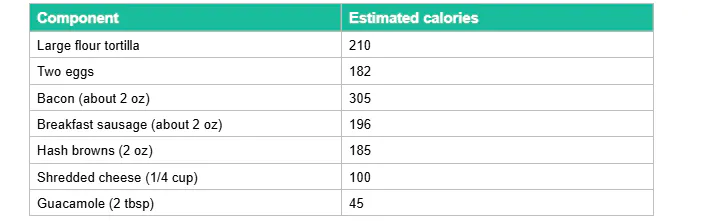
Add it all up with bacon and toppings, and MEL's estimate came to about 1,167 calories. Want it lighter? Use one tortilla size smaller, swap bacon for ham, and go easy on cheese and sour cream.
These are estimates, not lab numbers. Every kitchen portions differently, so check a restaurant's own nutrition info if you're tracking closely.
How do you make one at home?
Make one by cooking each filling separately, then assembling fast while everything is hot:
Cook the meat first. Crisp bacon or brown sausage or chorizo, then save a spoonful of fat.
Crisp the potatoes in that fat until golden.
Scramble the eggs soft. The USDA safe temperature chart lists 160°F for egg dishes.
Warm the flour tortilla on a griddle for about a minute so it bends.
Layer eggs, potatoes, meat and shredded cheese in a line across the center.
Add salsa or avocado, but keep wet toppings light.
Fold and roll tightly, tucking in the sides first.
Getting the wrap tight is its own skill. Our upcoming guide on how to fold and eat a burrito it step by step.
Where can you get one in Long Beach?
At Blue Burro, our breakfast menu is served all day, built around egg, cheese and hash browns. Our menu includes ham, bacon, chorizo, sausage, adobada and carne asada versions, plus a simple egg, cheese and bean option.
Our Cali Love burrito is the one we'd point a first-timer toward. It wraps Angus steak, egg, cheese, hash browns, avocado and our special sauce.
Think of the Cali Love as a morning take on the steak-and-potato idea behind the California burrito.
Browse the full Blue Burro menu for every option.
You can also find a Blue Burro location in Long Beach and nearby Southern California cities.
Frequently asked questions
Is this a Mexican food?
It's an American dish with Mexican roots. The flour tortilla and burrito format come from northern Mexico, but the breakfast version took shape in New Mexico in the 1970s and grew up in the American Southwest. Most Mexico City restaurants won't list one, while diners and taco shops from Albuquerque to Los Angeles treat it as a staple.
Can you make them ahead and freeze them?
Yes. Let the fillings cool completely, wrap each burrito tightly in foil or plastic wrap, and freeze them in a bag. Leave out watery toppings like fresh salsa and add them after reheating. Reheat until hot all the way through, since leftovers should reach 165°F according to USDA guidance.
What cheese works best?
Cheddar cheese is the most common pick because it melts smoothly and adds sharp flavor against the eggs. Pepper jack brings heat, Monterey jack is milder and creamier, and Mexican blends mix several cheeses for easy melting. Shred it yourself if you can, since pre-shredded cheese often melts less evenly.
Is it a healthy breakfast?
It can be, depending on what goes inside. Eggs bring protein, and adding peppers, beans or avocado raises the fiber. The calories climb with large tortillas, bacon, extra cheese and sour cream. For a lighter version, choose a smaller tortilla, lean ham or extra vegetables, and add flavor with salsa instead of creamy sauces.
What does smothered mean?
A smothered burrito is covered in red or green chile sauce, usually topped with melted cheese, and eaten with a knife and fork. It's a New Mexico specialty, and Tia Sophia's in Santa Fe is credited with putting the smothered style on its menu in 1975. Handheld versions keep the chile inside instead.
Do they work for brunch?
They're one of the easiest brunch foods to serve a group. You can set out eggs, potatoes, meats, cheeses and salsas and let guests build their own, or order a batch ahead and cut them in half for sharing. They travel well, stay warm in foil, and suit both early risers and late sleepers.
The quick-reference cheat sheet
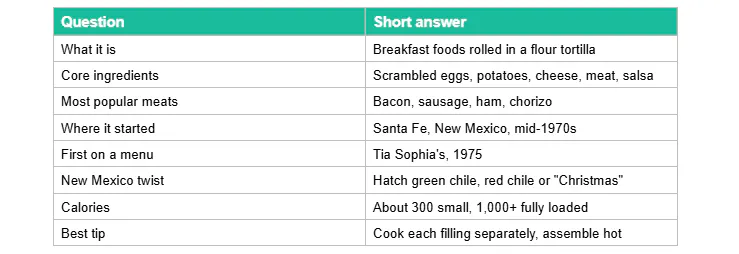
The bottom line: this is the easiest breakfast to carry and the hardest to stop eating. Keep the eggs soft, the potatoes crisp, and the tortilla warm, and you can't go far wrong.
One honest caveat: the calorie figures above are estimates from public databases and a 2021 article, not tests of any specific restaurant's burrito.
Feeding a crowd at the office or a weekend party? Our catering packs make it easy to bring breakfast for everyone.